.png?width=1200&height=630&name=Blog%20Banner%20-%20Keep%20Your%20Equity%20(1).png)
realestate
1031
flatfee
How To Keep Your Equity When Selling a Rental Property

Aaron Flint
Selling a rental property is very different from selling a primary residence. When you sell the home you live in, the IRS gives you a generous tax break (up to $500,000 in untaxed profit for married couples). But when you sell an investment property, the financial landscape shifts.
Between federal capital gains taxes, state taxes, and the often-forgotten "depreciation recapture" tax, you can easily watch up to 30% or 40% of your hard-earned equity vanish the moment the property transfers to a new owner.
Fortunately, as a real estate investor, you have access to one of the most powerful wealth-building tools in the tax code: The 1031 Exchange.
What is a 1031 Exchange?
Named after Section 1031 of the Internal Revenue Code, a 1031 exchange allows you to sell an investment property and defer paying all capital gains and depreciation recapture taxes by rolling those profits directly into a new investment property.
Think of it as an interest-free loan from the government. Instead of cutting a massive check to the IRS on tax day, you keep 100% of your equity working for you, allowing you to buy a larger, more profitable asset.
The "Like-Kind" Rule: The IRS requires that you exchange your property for a "like-kind" property. Many investors think this means trading a single-family rental for another single-family rental. In reality, the definition is incredibly broad. You can trade a single-family house for an apartment building, a strip mall, a commercial warehouse, or even raw land held for investment.
The Golden Rules of a Successful 1031 Exchange
The IRS is incredibly strict about how an exchange is executed. If you make even a minor error, the IRS will invalidate the exchange and hit you with an immediate tax bill. To ensure your exchange is bulletproof, you must follow these rules:
1. Hire a Qualified Intermediary (QI) First
You cannot touch the cash from the sale of your rental property. If the escrow company wires the proceeds into your personal bank account—even for five minutes—the exchange is dead. You must hire a Qualified Intermediary (QI) before your property closes. The QI holds the sale proceeds in a secure escrow account and transfers them directly to the escrow officer when you buy your next property.
2. Match or Exceed the Reinvestment Value
To defer 100% of your taxes, your replacement property must be of equal or greater value than the one you sold. Furthermore, you must reinvest all net proceeds and replace any mortgage debt you had on the old property with an equal or greater amount of debt on the new one (or offset it with additional cash).
3. Nail the Deadlines (No Exceptions)
The moment your rental property closes, two separate, non-negotiable countdown clocks begin simultaneously:
1.Day 0: The Close of Sale:The Clock Starts.
Your rental property officially transfers to the buyer. The net cash proceeds are wired directly to your Qualified Intermediary.
2.Day 45: The Identification Period:45 Calendar Days.
You must submit a signed, written list to your QI unambiguously describing the potential replacement properties you intend to buy. Most investors use the "Three-Property Rule," which allows them to identify up to three properties of any value. You cannot change this list after midnight on Day 45.
3.Day 180: The Exchange Period:180 Calendar Days Total.
You must officially close escrow on one or more of the properties identified on your 45-day list. This timeline includes weekends and holidays. If you miss this deadline by even an hour, the exchange fails.
Maximizing Your Equity from Start to Finish
A 1031 exchange is the ultimate way to protect your property wealth from taxes, but what about the transaction itself?
Traditional brokerages will ask you to hand over 5% or 6% of your property's sale price in legacy commissions. On a $600,000 rental property, that’s $36,000 straight out of your pocket before you even calculate your taxes.
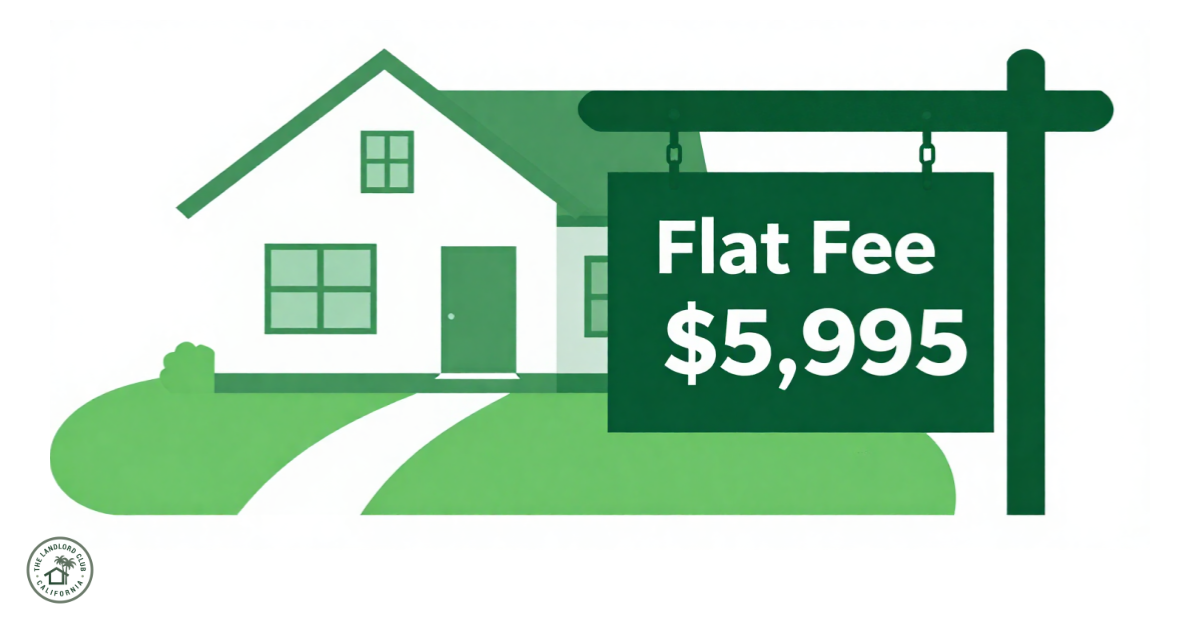
At The Landlord Club, we believe in a better way. Our modern, tech-driven Flat-Fee Brokerage Model gives you elite, full-service broker representation for a clear, predictable flat fee. By keeping your transactional costs low and pairing your sale with a flawlessly structured 1031 exchange, you keep your equity where it belongs—working for you to build your long-term wealth.